
Tags: evolution, life in the universe, intelligence, human role, environment, philosophy, biology
One Among Millions
Earth is home to an estimated 8 million species. Most live quiet lives—like ants, trees, fish, or bacteria—perfectly adapted to their environment, with no need for language, technology, or cities. Only one species has broken this rhythm: us. Humans.
We think, create, and destroy at a pace nature has never seen before. From an evolutionary standpoint, that’s quite strange.
Intelligence Isn’t Normal
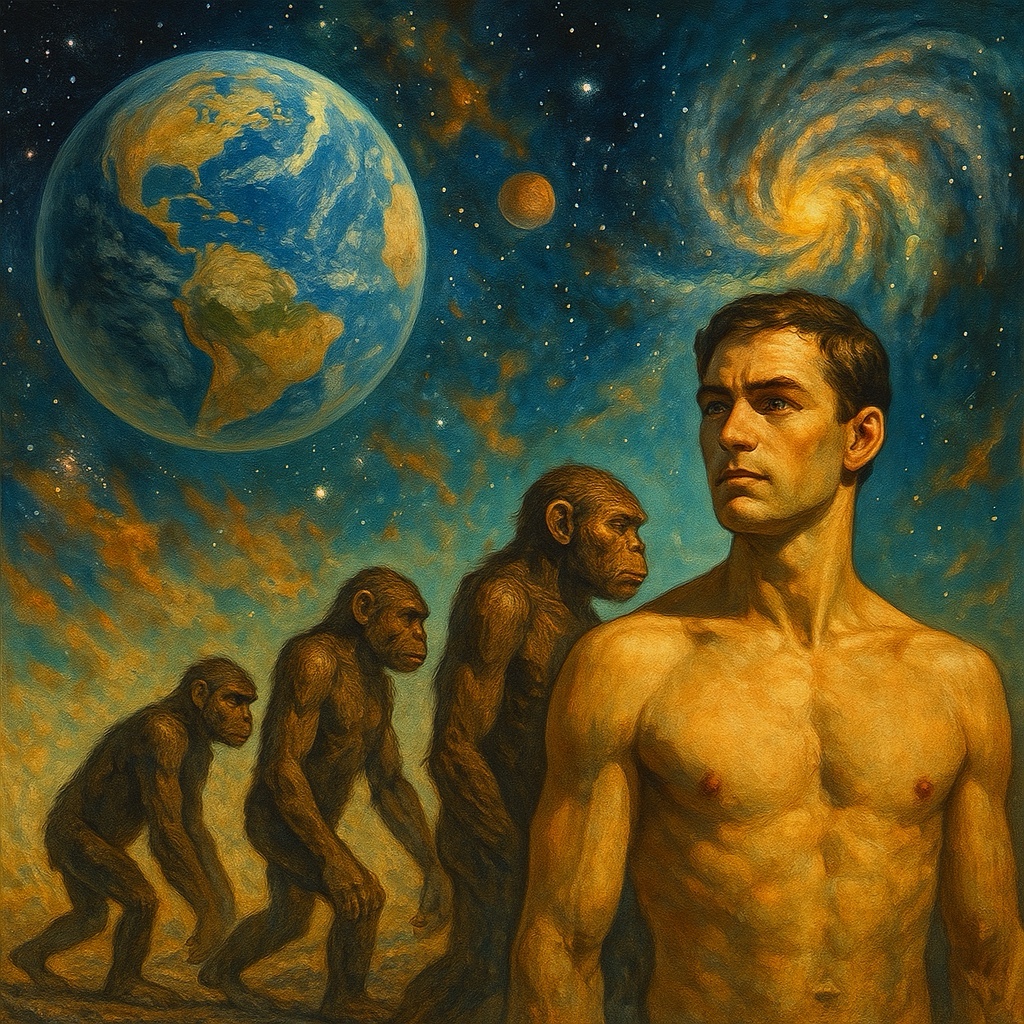
Human intelligence isn’t a natural goal of evolution. It has only emerged once, even though life has existed on Earth for billions of years. Even with near-perfect conditions, only one species developed language, tools, and civilization.
That makes us a biological anomaly—a kind of evolutionary glitch with global consequences.
We Shape the Planet – and Threaten It
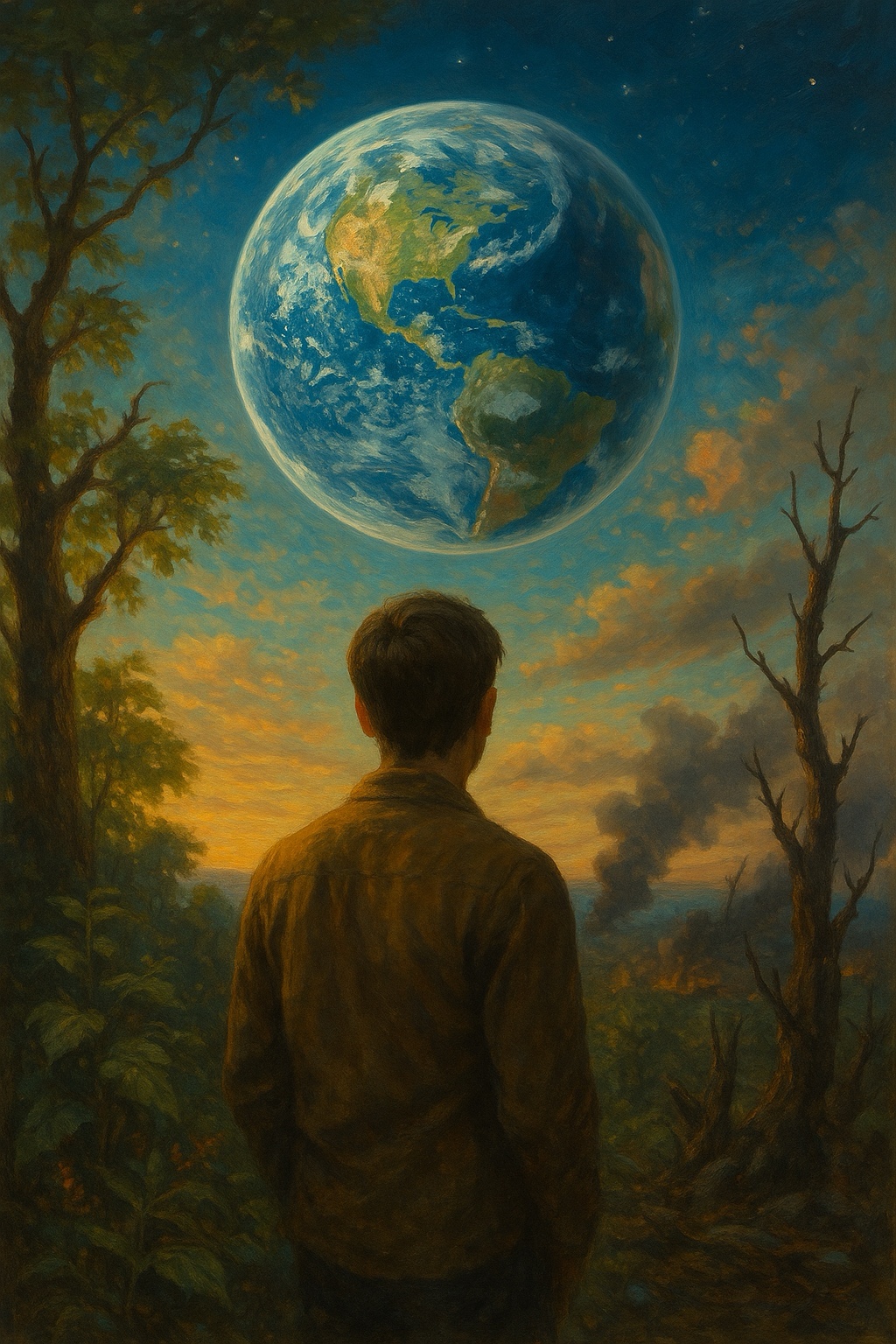
Humans are changing the planet at a speed no other species has achieved. We wipe out species, burn forests, heat the climate, and leave plastic in oceans and bloodstreams. At the same time, we send robots to Mars and write poems about the seas we pollute.
It’s a paradox: We’re smart enough to see the damage, but often too short-sighted to stop it.
Awareness: Our Curse – and Our Chance
No other species contemplates its own extinction. No other lifeform tries to save the climate or mourns endangered animals. And maybe that’s where our hope lies: We can choose differently. We can use our intelligence to preserve rather than destroy.
Maybe we’re not nature’s error. Maybe we’re its only shot at saving itself—if we want to be.
 Tankespinn
Legg igjen en kommentar