
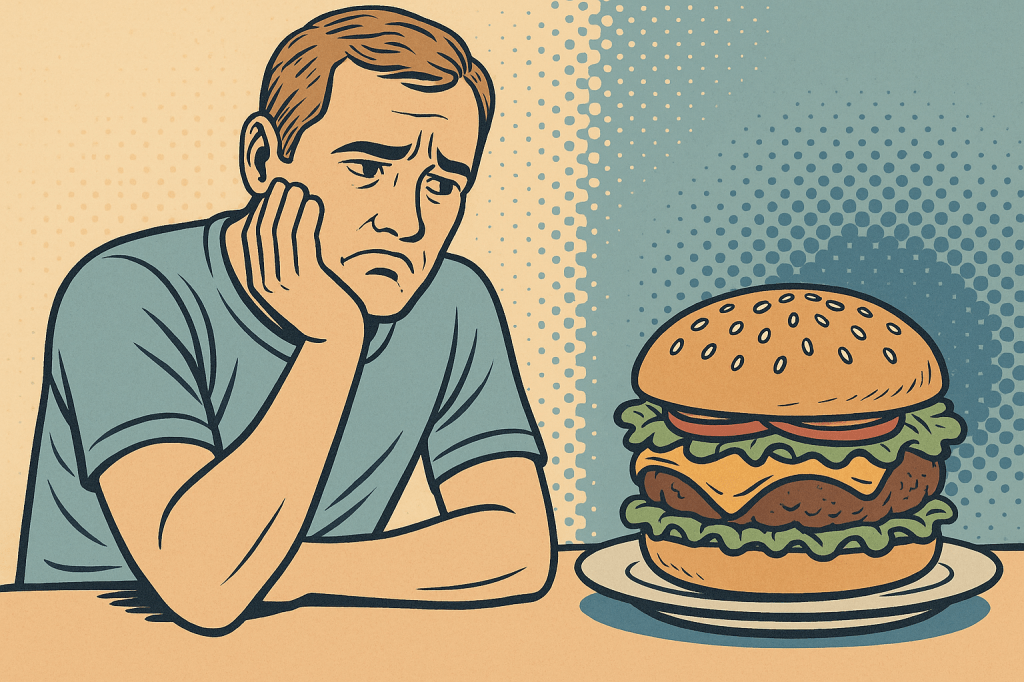
Motivation is great until it meets everyday life and carbohydrates.
You know the cycle.
You decide to “finally get your life together.”
You buy the planner. The water bottle. The gym membership.
You watch at least three YouTube videos titled “How to Become the Person You Want to Be.”
You feel unstoppable.
And then… three weeks later you are eating cereal out of the box, scrolling your phone in the bathroom, asking yourself:
“Who exactly was that person who thought I could change my whole life?”
This is not a personal flaw.
This is a pattern.
And you’re not alone — you’re statistically normal.
Let’s break that down. Humor included. Ego mildly bruised.
The Motivation High Is Not Your Friend (It’s a Dealer)
When we start something new, we feel a rush of possibility. Brain chemistry throws a party: dopamine, novelty, excitement, identity upgrade.
But motivation has the lifespan of a houseplant in a student apartment.
Looks good on day 1.
Dead by day 6.
The reason you don’t “stay motivated” isn’t because you’re weak — it’s because motivation was never designed to last. It’s the spark, not the firewood.
But self-help culture keeps selling the spark.
More hype. More slogans. More “beast mode”.
Meanwhile, nobody’s selling the boring part: showing up when it’s no longer dramatic, emotional, or Instagrammable.
The Self-Improvement Industry Doesn’t Want You to Succeed Too Much
If every diet worked, the diet industry would collapse.
If every gym member actually used their membership, gyms would be overcrowded and unprofitable.
If everyone who bought “The Life-Changing Book” actually changed their life, they wouldn’t need book #14.
Repeat customers aren’t a flaw — they’re the business model.
The industry survives because we fail just slowly enough to blame ourselves, not the system.
And since failure feels personal, we rarely stop to question the structure.
We just think: “Next time will be different.”
And the next time is always more expensive.
We Treat Change Like a Movie Montage
People imagine progress like this:
Week 1: learning
Week 2: visible results
Week 3: “Who is this new person?!”
Week 4: other people notice
Week 5: success becomes effortless
Reality:
Week 1: enthusiasm
Week 2: discipline
Week 3: doubt
Week 4: identity crisis
Week 5: carbs
Change is boring. The part that works is not the part we like.
We want transformation.
What we get is repetition.
Cue disappointment.
The Real Enemy Isn’t Laziness — It’s Friction
We don’t quit because we are weak.
We quit because the system we try to live inside is built on a fantasy of endless time, endless energy, and endless control.
You don’t fail because you lack willpower.
You fail because your environment, habits, and emotional load are not designed for longevity.
If you have to make effortful decisions every day, the game is already rigged against you.
The people who succeed at long-term change are not more motivated — they’re just less dependent on motivation.
“Motivation is a great spark, but a terrible power source.”
Put that on a mug. You’ll need it around week three.
The Most Dangerous Myth: “When I Feel Ready, I’ll Start Again”
Let’s translate that sentence into plain reality:
“I will wait for the exact same emotional high that already failed me last time.”
We love the idea of starting. It feels powerful, clean, hopeful.
Continuing? Not as sexy.
Starting gives us identity.
Continuing gives us… silence.
No applause.
No dopamine hit.
No “New Year, New Me” comments from friends.
Just you, doing the thing, again, and again, and again.
That’s where change lives — not in inspiration, but in repetition that nobody else sees.
So What Actually Works?
Not motivation. Not hype. Not “visualize your higher self.”
The things that work are unsexy, unmarketable, and wildly effective:
✅ Lowering friction
✅ Building identity before behavior
✅ Designing for bad days, not perfect ones
✅ Choosing direction over intensity
✅ Treating change as a relationship, not an event
The people we call “disciplined” are usually just people who made the right thing the easy thing.
No resistance. No drama. No motivational playlist required.
The Real Punchline
Most people are not failing change —
they are just using a system designed for day one, not day 100.
They’re trying to live off fireworks instead of electricity.
So the next time you “lose momentum,” don’t ask:
“Why am I like this?”
Ask:
“Was I ever building something I could actually sustain?”
That’s not self-blame.
That’s self-rescue.
Closing Thought
Maybe the problem was never your lack of willpower.
Maybe the problem was believing that change should feel good the whole time.
Real change doesn’t feel like a breakthrough.
It feels like a quiet habit that slowly stops being a struggle.
And nobody writes motivational quotes about that —
because it doesn’t sell as well as “Crush Your Goals In 30 Days.”
 Tankespinn
Legg igjen en kommentar